Well-Meaning Dragons: The Hidden Resistance You’ll Face When Doing Something Different
Most people expect resistance from strangers.
They expect it from critics.
What they don’t expect…
is resistance from people who genuinely care about them.
But that’s exactly what happens when you start doing something different—especially when it comes to your finances, structure, or long-term strategy.
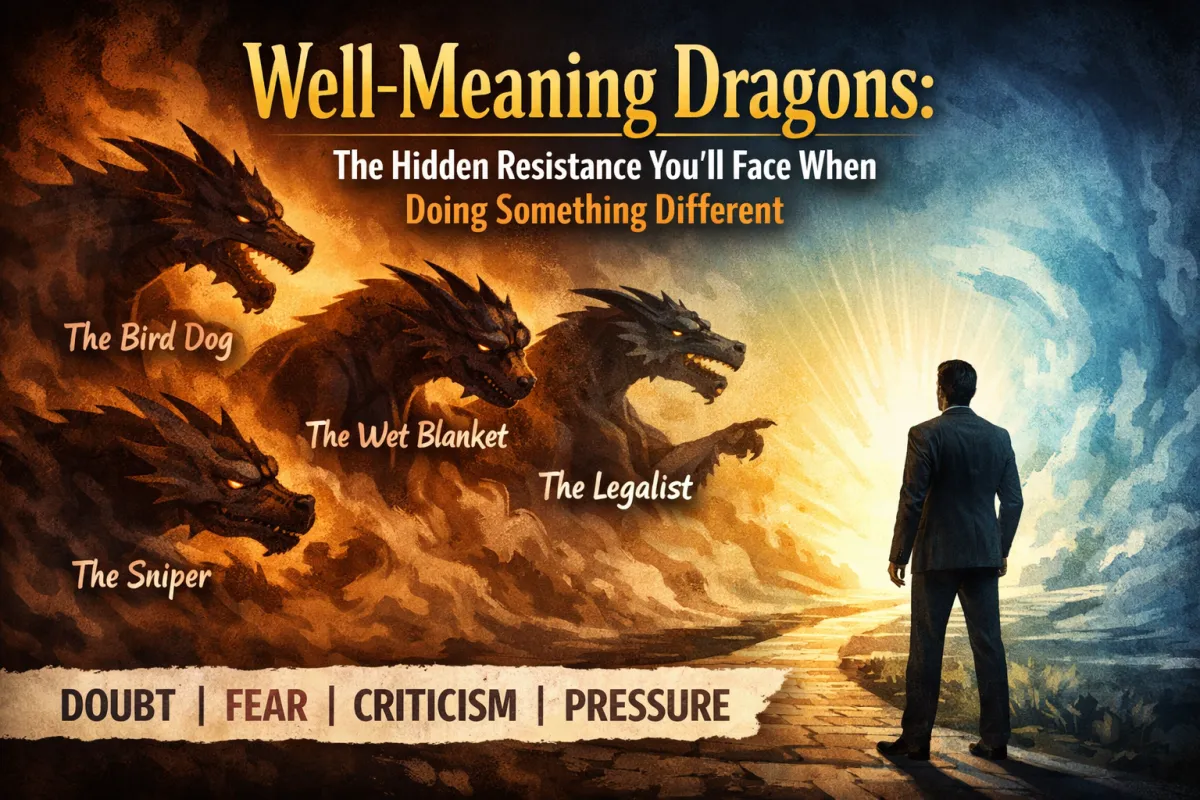
We call them Well-Meaning Dragons.
What Is a Well-Meaning Dragon?
AWell-Meaning Dragonis someone in your life-friend, family member, colleague-who discourages you from moving forward, not out of malice, but out of misunderstanding.
They’re not trying to hurt you.
They’re trying to protect you.
The problem is… they’re operating fromf ear, not knowledge.
You’ll hear things like:
“That sounds risky”
“What if something goes wrong?”
“I don’t think that’s how it works”
And over time, those comments can start to create doubt—even if you were confident before.
Why This Happens
Anytime you step outside of what’s considered “normal,” you trigger a reaction in others.
Not because you’re wrong but because:
They haven’t seen it before
They don’t understand it
It challenges what they believe to be true
So their brain does what it’s designed to do:
protect-and warn.
Even if there’s nothing to be afraid of.
The 4 Types of Well-Meaning Dragons
Once you know what to look for, the patterns become obvious:
1. The Bird Dog
Always searching for problems, risks, or reasons something won’t work.
2. The Wet Blanket
Quick to shut down excitement and replace it with doubt or negativity.
3. The Legalist
Relies on rigid interpretations or misunderstood rules to argue against your decisions.
4. The Sniper
Doesn’t confront you directly but shares criticism or skepticism with others.
The Real Impact (If You’re Not Aware)
This isn’t just about annoying conversations.
Left unchecked, this kind of influence can:
Slow your momentum
Make you second-guess your decisions
Create tension in relationships
Pull you back into “playing small”
And the worst part?
It happens subtly.
How to Handle It Without Losing Your Direction
You don’t need to argue.
You don’t need to convince.
You just need to stay grounded.
1. Keep Perspective
Their reaction is emotional, not informed.
They’re responding to what they think is happening not what actually is.
2. Don’t Engage in Conflict
You don’t win by proving them wrong.
You win by continuing forward with clarity.
3. Invite, Don’t Defend
If they’re open, let them explore the information themselves.
Real understanding doesn’t come from debate- it comes from exposure.
4. Use Proof When It Matters
For those who are genuinely curious, share real outcomes- not arguments.
5. Set Boundaries
Not everyone needs access to your decisions.
Protect your energy and your focus.
6. Stay Courageous
Doing something different requires a level of independence most people never develop.
That’s not a weakness.
That’s the point.
Final Thought
If you’re stepping into something new, you will face resistance.
Sometimes from the outside.
Often from the people closest to you.
That doesn’t mean you’re making the wrong move.
It usually means you’re thinking for yourself.
And that’s where real change starts.
